Christina Siew is a God-seeker and blogger who writes about family and baby matters. I got to know her through blogging. Interestingly, I have gotten to know many acquaintances (some became friends) through this ministry of writing. Occasionally, as a guest preacher, I would meet some appreciative Christians who have been reading my blog posts. I have always been surprised that the Lord has used my writing to bless and edify the body of Christ. My articles are not particularly thorough or interesting. They are an editor’s nightmare. I simply plod on despite this because people seem to like them and the search engine has been partial and merciful to me. Christina runs two websites, one of which about travel, family and baby: go HERE. The other one has an interesting blog title: “Shema-rhema” (shema=hear/rhema=spoken word), which together means hearing the spoken word of the Lord. This is a lovely rhyming and memorable name for a website about spiritual growth and insights. Once she had the idea of including interviews with people on her website. She asked if I was willing. I said, Sure, pass me the questions. Bloggers are an endangered breed and should support each other! The questions motivated me to reflect on what’s been happening to me and proved to be a fruitful exercise for me. The result is HERE, a lovely interview titled “RETIRED SENIOR PASTOR, NOW RE-TYRED” thanks to her skilful editing. Visit her blog and be blessed by this and her other posts.
Posts

The world of fashion is estimated to have lost US$2 to 3 trillion a year to counterfeiters of their branded products, usually fashion and luxury goods like clothing, shoes, watches and leather items. I wonder how much is lost in the kingdom when there are counterfeit or fake preachers in the pulpit. Probably, it can never be quantified. There were false prophets in the Old Testament, wolves in sheep clothing in the New Testament and they are not absent from Christendom today. Authenticity in preachers is super important for effective communication.
Authentic preaching changes lives
Effective sermons are forged in the furnace of authenticity. Authenticity in preaching is power-packed, not in a spectacular flourish, but in a quiet way. There is no lightning or thunder, no fire nor earthquake, but the Spirit’s work in connecting the speaker with the hearer and penetrating their hearts with the unvarnished truth.
Authentic preaching facilitates a connection with the hearers and engages them. Such sermons seem to come from the heart of someone who seeks to practice the truth in everyday life, even though the preacher is far from perfect. With the qualities of openness and transparency, such sermons make the preacher relatable to ordinary people with common struggles. There is a bond of trust as the congregation senses that the preacher is for real and not wearing a mask.
If the preacher is also their pastor it is even better because he or she cannot escape scrutiny and the church grapevine, and if what they hear from the pulpit is congruent with what they see in the life of the pastor, that word has tremendous power to inspire changes in values and beliefs and upload new operating systems in people’s lives. The reverse is also true: inconsistency or incongruence between what is preached and what is practised cannot be hidden and will undermine the credibility and power of the message.
An authentic preacher is someone with the qualities of being genuine, true to oneself and not pretending to be something other than what one is, and living a life that seeks to be congruent to the values, beliefs, and convictions one holds dear and proclaims. There is honesty, integrity, and transparency present in the authentic preacher and this potent mix inspires trust and accelerates personal connections with others.
Jesus and Paul on authenticity
Are there scriptures that highlight the importance of authenticity in life and preaching? Take a look at a few of them below:
“Then Jesus said to the crowds and his disciples: ‘The teachers of the law and the Pharisee sit in Moses’ seat. So you must be careful to do everything they tell you. But do not do what they do, for they do not practice what they preach ‘”. (Matt 23:1-3) The people feared the teachers of the law and Pharisees because they wielded religious power, but were despised because they did not practice what they preached. Jesus saw through their masks of hypocrisy and exposed their deceit. St Paul warned the church in Corinth of the fakery of the so-called apostles who had fooled them. He underlined the importance of integrity in apostleship and ministry: “Rather, we have renounced secret and shameful ways: we do not use deception, nor do we distort the word of God. On the contrary, by setting forth the truth plainly we commend ourselves to everyone’s conscience in the sight of God” (2 Cor 4:2). St Paul claimed the high moral ground in both the character of the messenger and the substance of the message. In his letter to Titus, he enjoined authenticity in leadership and preaching: “In everything set them an example by doing what is good. In your teaching show integrity, seriousness, and soundness of speech that cannot be condemned, so that those who oppose you may be ashamed because they have nothing bad to say about us”(Titus 2:7-8).
One of my favourite books on preaching is John Stott’s “Between Two Worlds” and in this concise gem he wrote: “Communication is by symbol as well as speech. For ‘a man cannot only preach, he must also live. And the life that he lives, with all its little peculiarities, is one of two things: either it emasculates his preaching or it gives it flesh and blood'(John here quotes J.H. Bavinck). We cannot hide what we are. Indeed, what we are speaks as plainly as what we say. When these two voices blend, the impact of the message is doubled. But when they contradict each other, the positive witness of the one is negated by the other. This was the case of the man Spurgeon describes as a good preacher but a bad Christian: he ‘preached so well and lived so badly, that when he was in the pulpit everybody said he ought never to come out again, and when he was out of it they all declared he never ought to enter it again.” (John quotes from Spurgeon’s book) It is at this point that a practical problem presents itself to us. Pastors are told to be models of Christian maturity.”
The how of authentic preaching
How then can one preach with authenticity? First, the preacher has to engage with the Bible He has to cultivate a life of prayerful, systematic study and meditation of God’s word. He approaches the Bible with an openness that allows the truths of God’s word to penetrate his mind and heart. He allows the Word to affect his thinking, affection, and action. Little by little he incorporates truth into his lifestyle and it becomes the dominant operating system of his life. One verse that inspired me and that I hold dear is in Ezra 7:10: “Ezra had set his heart to study the Law of the Lord, and to do it and to teach his statutes and rules in Israel.” This one verse summarizes the three essential habits of the authentic preacher. First, he studies – eats, digests, and assimilates the word. Second, the truth points him to the reality of the Living Word, and he relates intimately with Jesus himself. This faith relationship releases the grace to do what the word says, and to experience the fruit of obeying God. Finally, this growing confidence in the power of truth enables the preacher to boldly proclaim the truth he has incorporated into his life. This growth in congruence is “from one degree of glory to another” (2 Corinthians 3:18).
Second, the preacher is humble and transparent when he or she struggles to live out the topic being preached. Admitting lack, mistakes, and struggles or that you do not have all the answers displays authenticity. The preacher can ask the congregation for prayers so that you may grow continually in the particular facet of Christian life that you are preaching about. St Paul called on the believers in Ephesus to pray for him “that words may be given to me in opening my mouth boldly to proclaim the mystery of the gospel” (Ephesians 6:19).
Third, authentic preachers speak from the heart and are not hesitant to talk about their personal experiences of struggle or success. Sharing personal, real-life examples that illustrate the truth you are preaching about is inspiring and memorable. Personal stories are engaging, disarming, and moving. They have a way of touching the affective and volitional domains of listeners, moving them to make decisions that lead to change in their lives. St Paul, in his legal defence against his accusers, chose to share the personal story of his conversion encounter with Jesus on the road to Damascus.
Fourth, during the preparation of the sermon, the preacher engages personally with the passage or topic to experience its power and to notice how it moves him or her. The preacher reflects on how those insights and truths have impacted him or her in the past and in the present. He or she prays for a deepening of the application of the truths in their own life and congregation.
Fifth, the authentic preacher is open to feedback from the congregation and is in dialogue with them so that he or she knows whether their preaching is connecting with their needs, questions and struggles. They hear their perspectives on how the sermon was received by them so that they can be of greater help to them in the future.
Heavenly Father, to preach is a sacred invitation to share your truth and my life with the congregation I serve. Help me to be true to your word in the way I live, and the way I communicate your truth. I want to dedicate myself to prayer and the preaching of your word. Grant me great grace to do so. Amen.

I was told not to miss this Thai movie. It has been a long time since I stepped into the cinema. Not since the pandemic. Should I go? The title was intriguing – “How to Make Millions before Grandma Dies?” Later the Straits Times featured an article about it, so my wife and I headed down for the 10:30 am and got the $5 senior ticket.
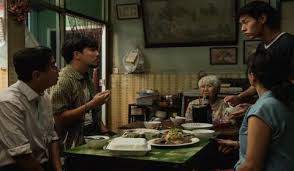
The heartwarming, charming family drama ran for two hours and seven minutes but it felt like an hour and a half. It was a charming, engaging, and moving gem: the penetrating dialogue, the straightforward yet compelling storyline, timely comedic commas, relatable characters, and multi-layered timeless themes that stayed with me many hours after it ended. Kudos to the director and writer, the cinematographer, and the actors who pulled off what would be a family classic.
I have taken the liberty to copy and paste a well-written storyline by Theresa Tan from Salt & Light. Do not read if you haven’t watched the movie:
“…the tale of young M (Putthipong Assaratanaku), a university dropout who spends his days being a “game caster”. Nowhere near making the millions he imagined, he leeches off his hardworking, long-suffering mother Chew (Sarinat Thomas), and has no time nor regard for family traditions. One day, he watches his cousin Mui inherit her grandfather’s huge house after becoming his caregiver in his last days. She tells M that she became Agong’s “number one” by giving him the one thing nobody else – not even his children – could: Time. Inspired, M sets his sights on his ageing Amah (grandmother), played by the wonderful Usha Seamkhum. She is independent, lives alone and sells congee every morning. When the doctor tells his mother that Amah has Stage 4 colon cancer, the family decide to keep it a secret from the elderly woman.
M sees his chance to strike fast and move in with his grandmother. She’s no fool – the fact her only grandson suddenly shows up could only mean one thing. To his credit, M tries hard. He brings her beef noodles, only to be told her religion forbids it. He queues for her favourite fried fish, only to be told she’s already eaten. You feel his frustration, yet you can’t fully empathise because he is motivated by a potential inheritance. The development of their unlikely relationship makes up the core of the movie: A young man is transformed day by day into the loving caregiver he initially pretends to be. An old woman learns to slowly trust one member of the family again after being hurt and disappointed for so many years.
The tension lies in the question: “Who will get the house after she dies?” It’s a common breaking point for many families, especially Asian families, whether rich or modest. The oldest son, Kiang, whom everyone believes is her favourite, makes a bid to move his mother into his big house in the country, where he lives with his gold-digger wife and only daughter who attends international school and speaks English. The youngest son, Soei is a gambler who is always stealing from his mother and running away from creditors. The daughter in the middle, Chew, works blue-collar jobs and is the one constantly saddled with taking her mother to the doctor and doing other tasks expected of daughters.
The tussle for the title deed to her small house happens when Amah’s chemotherapy fails. While his mother is in hospital, older brother Kiang demands to know where the deed is kept. Sister Chew tells him it is in Amah’s cabinet and he leaves in a hurry to retrieve it. Chew then pulls out the deed from her bag and hands it to her younger brother Soei. “Quickly get it transferred,” she tells him. M, watching this, is crushed. All his “hard work” had been for nought – his gambler uncle got the house even though he did not spend a day caring for his own mother. M rails at his grandmother for her unfair treatment. “Why am I not your number one?” he says, hurt. The only one who doesn’t put up a fight is his mother. In a conversation with her son, Chew says matter-of-factly: “Sons inherit the house. Daughters inherit cancer.”
The prodigal son to the end, Soei sells the house immediately, and puts his mother in a nursing home. M’s heart bleeds for his grandmother, who is left to die alone. He brings her back to his mother’s home, where he continues caring for her. Of course, Amah dies, but in the best way possible: Holding her grandson’s hand while he sings to her.”
Some films can be very nourishing for the soul. This is certainly one of those films that can be watched, reflected upon, and used to gently surface issues and shadows in our souls that need to be talked about with the Lord and perhaps with a spiritual director.
For me, this film mainly points to the heavenly Father’s love for his children. I see it most clearly in Amah’s love for her children and for M. Each of them did not deserve Amah’s love.
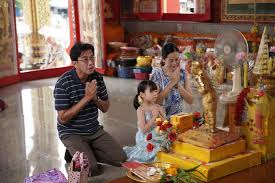
The rich and successful eldest son, Kiang, hardly spent time with his mother. Even during her cancer treatment, he hardly visited her or helped out, except to contribute money. When Amah’s chemotherapy treatment failed and she was on death’s passageway, he suddenly invited her to stay with his family in his large country home. When she refused, he was angry and halted communications with her. He asked the sister where the title deed to Amah’s small home was kept even before she passed away. Ungrateful and greedy son. Yet Amah loved him right to the end, even though she saw all his ugliness and selfishness. This is so like God’s unconditional love. Put yourself in Kiang’s shoes for we often similarly treat God as he did with his mother. Yet God loves us.
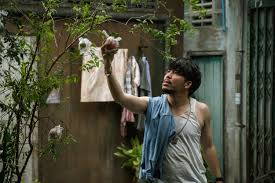
The younger son, Soei, was a useless leech and gambler who often stole from Amah’s meagre earnings from selling congee in the market. She kept some savings in a box in the kitchen and he knew where to find it. He was constantly running from creditors and asking for money from Amah and his siblings. He never cared about Amah before or after finding out about her illness. A pathetic and despicable man. Amah knew him inside out and yet she cared and decided to give him the title deed to her house. He immediately transferred ownership, sold the house and placed his mother in the nursing home. He couldn’t even wait till she died! Despicable. Yet loved unconditionally by Amah. This is so like God’s love. I hope there is none as useless and despicable, bound by addiction and without direction, as Soei was, but if Soei’s character resonates with you in some way, then there is good news for you because God’s unconditional love is available for you.

Chew, the daughter in the middle is the most moral and dutiful of the three children of Amah. She worked at a supermarket and yet found time and took leave from work to accompany her mother for medical treatment. She had no thoughts of grabbing the inheritance. She knew the ancient Chinese tradition of leaving an inheritance to the men in the family. In one of the most unforgettable lines in the film, she said to her son, “Sons inherit the house. Daughters inherit cancer”. Yet I felt that despite the nobility of her character, it was a coat she wore out of duty and a desire for validation that her mother never gave her. In another poignant scene, when she opens up and complains to Amah about her resentment, Amah replies to her, “You’re the one I always want to be with”. Another million-dollar line that resonates so much. This is how God feels about each of us. In our busyness serving the Lord in church, workplace, and at home, we lose sight of how God feels about us. “You’re the one I always want to be with”. What a powerful motivator to be more attentive to God’s desire for us to be fully present with him.

Finally, we see the depth, height, breadth, and length of God’s love in Amah’s love for M, her grandson with the ulterior motive at the beginning. Everyone loves a drama that shows a deeply flawed main character taking a journey that transforms and matures him. This was what exactly happened and demonstrates the power of love. Right from the beginning Amah knew what he was after. She knew his fake love was disfigured by a crooked motive of potential inheritance. Yet she allowed him to do so. What motivated her: pragmatism? loneliness? or wanting to spend time with her grandson? Whatever it was, her unconditional love for her grandson in the end affected him deeply, liberated him from the love of money, and taught him how to love unconditionally, the way she did. This is so like God’s transforming love. It takes time but God is infinitely patient and loving and if we abide long enough under the shelter of his love, we will be transformed too.
The Lord is compassionate and gracious,
slow to anger, abounding in love.
He will not always accuse,
nor will he harbour his anger forever;
he does not treat us as our sins deserve
or repay us according to our iniquities.
(Psalm 103: 8-10)
This is a poignant movie that has rightly been released over Mother’s Day and Father’s Day. It certainly will get people thinking and talking about family dynamics, Chinese traditions, inheritance, and other themes. It will trigger memories – pleasant and hurtful ones. It will make you think about life more deeply. I wonder what are your reflections and takeaways from this movie. Do comment and share it with other readers. Thanks.
PS you can read Theresa Tan’s full review of the film HERE. She has some interesting and practical biblical perspectives about inheritance.

A few months back, I was preparing a sermon about the Old Testament book of Habakkuk. As I studied the text, I was surprised at how the truths about God and his ways with Israel and its enemies may be relevant to what is happening in the ongoing Israel-Gaza War. Let me explain.
The prophet’s lament
Habakkuk was a prophet who lived in a dark period of Israel’s history. He ministered during the reigns of the last three kings of the southern kingdom of Judah. The nation was rotten to the core: violence, destruction, injustice, idolatry, strife and wickedness. The prophet was deeply affected and lamented to God in prayer. It seemed God was deaf to his pleas for God to intervene and reform society. Here is his honest complaint to God (Habakkuk 1:1-4 NLT):
How long, O Lord, must I call for help?
But you do not listen!
“Violence is everywhere!” I cry,
but you do not come to save.
Must I forever see these evil deeds?
Why must I watch all this misery?
Wherever I look,
I see destruction and violence.
I am surrounded by people
who love to argue and fight.
The law has become paralyzed,
and there is no justice in the courts.
The wicked far outnumber the righteous,
so that justice has become perverted.
I like the honest lament of the prophet. Perhaps we need to lament over the tragic wars in Myanmar, Ukraine, Israel-Gaza in our prayers.
I also like that Habakkuk actually bothered to patiently wait for God’s answer. I admit I speak more and listen less in prayer, in most of the decades that I have been a Christian. I am learning more and more to listen, to watch, to discern God’s notifications. I am learning to unmute my spiritual notifications button.
God’s inconceivable reply
God’s reply got Habakkuk puzzled and upset! God said to him: “I am raising up the Babylonians, a cruel and violent people. They will march across the land and conquer other lands. They are notorious for their cruelty and will do whatever they like” (Habakkuk 1:6,7).
Habakkuk must have thought, “Did I hear God correctly?” Is God going to discipline his chosen people, with whom he made a covenant of love, through a more violent, cruel, and unrighteous nation?
O Lord my God, my Holy One, you who are eternal—
surely you do not plan to wipe us out?
O Lord, our Rock, you have sent these Babylonians to correct us,
to punish us for our many sins.
But you are pure and cannot stand the sight of evil.
Will you wink at their treachery?
Should you be silent while the wicked
swallow up people more righteous than they? (Habakkuk 1:12,13)
God’s ways are usually different and higher than our ways. What is unthinkable, unfathomable to the prophet is a real possibility with God! How can a holy God use an unrighteous people to punish a more righteous people? How can God allow this to happen to his chosen nation, his covenanted people?
9/11 a judgment of God
I was at home when 9/11 happened. I remember it vividly. After a tennis game, in the master bedroom, cooling down before I bathed, on the TV, before my eyes, I saw a plane ploughed into one of the World Trade Centre towers. What movie was this? I then noticed that a news reader was relaying news of the Al Qaeda attack on the New York buildings. I was shocked.
In the aftermath of this terrorist attack, a few preachers proclaimed that this was God’s judgment on America for its idolatry and sins. There were major reactions and objections to the message of judgment: how can a righteous God use a violent, cruel, terrorist instrument to punish a nation that believed in God. Same reaction as Habakkuk’s. In the light of what we have read in Habakkuk, why isn’t it possible that those preachers may be speaking God’s word?
What about October 2023?
What about October 2023? Was God using Iran and its proxy, Hamas, as an instrument to discipline a nation he has chosen and loves? Is not this unthinkable thought a possibility? Hasn’t modern Israel broken its covenant with God too? Israel is very much a secular nation that has left its holy roots to pursue its idols. Even if half the population claims to be Orthodox, they practice a form of religion that doesn’t please God.
God clarifies Habakkuk’s ethical dilemma
It did not take long for God to shine his light on Habakkuk’s ethical dilemma. God’s reply to Habakkuk was that the Babylonians would also be punished for their violence and cruelty – in due time. God’s judgment will come upon the Babylonians for their aggression, greed, pride, sadistic humiliation of people, and idolatry. God assured Habakkuk that this would definitely happen even if the vision awaited fulfillment for a long period (70 years later the Medo-Persians would topple the Babylonians).
In the meantime, the righteous will have to keep faith in God, and if they do so, they will live: “the righteous will live by faith”. The answers of God to Habakkuk’s complaint and protest brought him out of his doubts and distress to a place of peace and contentment. He was now convinced that God was Sovereign over all nations, small or superpower. His ways were higher than his ways or thoughts. He is worthy of complete trust and he would rest in him.
Even while the wars around us continue to increase in intensity and tragedy, and it angers and frustrates us, we will do well to remember the book of Habakkuk, and learn to lament and finally to trust in God to act in sovereignty, holiness, and justice. Take comfort in this apt song by Lauren Daigle: “Look Up Child”
Where are You now
When darkness seems to win?
Where are You now
When the world is crumbling?
Oh I, I hear You say
I hear You say
Look up child, Look up child,
Where are You now
When all I feel is doubt?
Oh, where are You now
When I can’t figure it out?
Oh I hear You say
I hear You say
Look up child,
Look up child,
Look up
You’re not threatened by the war
You’re not shaken by the storm
I know You’re in control
Even in our suffering
Even when it can’t be seen
I know You’re in control
A Prayer of Hope
My heart cries out to you Papa for the conflicts in the U.S., the war in Ukraine and Myanmar and Gaza. Come Oh God, and save your people and cause wars to cease when your Son returns in glory and power to judge the world and establish the new heaven and the new earth. Fill your people with hope Father. Whenever we read or watch the news, our hearts are broken at the fake news, this fallen world, all the confusion and conflicts. There is no peace, but we do not want the external stormy world of hopelessness to control the temperature of our faith and the stability of our deep peace. So Father, send your Spirit afresh, the dove of heaven to fill our hearts with peace and the purity of worship. Let no one say that you have abandoned the church or this rebellious world. Let no one say you are unrighteous and untrue. Let the world know that you are sovereign and there’s no other God in all the universe. Amen.
(a tongues & interpretation prayer excerpt from my journal entry on 18 May 2024, a day before Pentecost)

Well, Lord, I was on the mountaintop enjoying the fresh air and views with You. Freed from pastoral work in church, and able to do only what I love and want to do, I felt a new lease of life and vision. My physical health improved and the doctor took me off blood pressure pills. I enjoyed the slower pace of life, the simple joys of home-bound living during the two years of the covid pandemic, and enjoyed preaching in my home church and in other churches as well as in teaching missions. I received formation as a spiritual director with a wonderful community of brothers and sisters, many of whom became friends and fellow ministers. I was blessed by an ecumenical community of spiritual directors and religious who taught, formed and loved us. I tasted the privilege and joy of accompanying others in their journey of growth. Thank You, Lord, for a sweet retirement and transition in new avenues of ministry.
Lord, this year I found myself in the valley of distress and uncertainty when my wife was attacked by bacteria on her spine which caused unbearable pain for her, and anguish for me as I felt powerless to relieve that pain. Thankfully, even in the valleys of life, You are actively present. You gave me this verse in Isaiah 43:2, “When you pass through the waters, I will be with you; and through the rivers, they shall not overwhelm you; when you walk through the fire you shall not be burned, and the flame shall not consume you.” You spoke and I was strengthened (Daniel 10:19).
My wife was in the ward and the community hospital for a total of 51 days. You were with her in her pain and her deliverance from it. She went through the spinal operation You granted us a godly surgeon, Dr Reuben Soh, and his skillful hands stabilized her spine and removed the cause of her pain. She had antibiotics infusion for weeks on end. You gave the infection specialist Dr Jean Sim the wisdom to treat my wife. It was a medical emergency and she was in grave danger, but You, O Lord, was with her, and today she is recovering well. You moved many pastors, friends and my church family to pray and You heard and answered them: today she is well and no longer in pain. Lord, You are so good.
Lord, I thank you that now I am out of the valley and in the plains. My wife Jenny is at home getting stronger with her twice-a-week physiotherapy sessions at St Luke’s Hospital and she continues with an oral antibiotics course. I am less tired and at peace. I am also beginning to return to the routines and joys that were a part of my usual schedule. I continue to preach and teach and this gives me joy. I continue to give spiritual direction to a few persons who want You to direct their lives. I have begun to edit and refine the first draft of an e-book that I have written. I was able to continue playing pickleball twice a week whenever possible. Beginning in May, I will be putting on my backpack and hiking shoes and preparing pilgrims for their camino in October 2024. Lord, You also answered one of my longstanding prayers as I did not know what course to use my Skills Future Credit on. Soon I will attend a course on Artificial Intelligence, and it will be conducted near my home too. Thank you for sending Susan who talked about and recommended the course and helped me to sign up.
Lord, I know there are some limits to ministry and meetings when they conflict with physiotherapy and medical appointments. These limits, I believe, are necessary and will only be temporary. I believe Isaiah 43:2 and You will strengthen my wife and make her as active and healthy as before.
Lord, does this answer Your question?