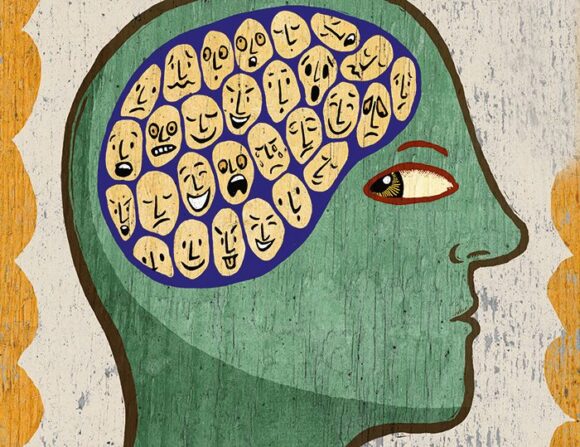
Our parents play a significant role in our development. What they hold dear, how they view the world and life, and what they aspire for us to be are communicated to us like the rice we eat and the air we breathe. We hear them, and we observe them and draw understandings of what gives them pride and happiness and what brings shame, displeasure and disappointment to them. These voices continue in our heads even after we leave home, even after we have set up our own families, or live independently.
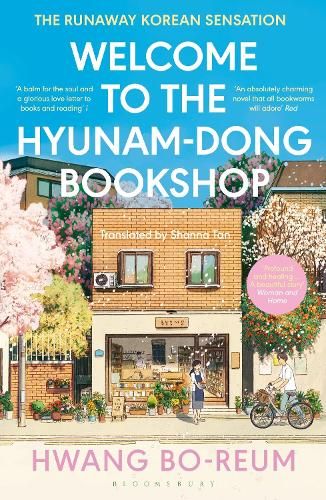
Good novels communicate this in more effective ways than sermons. They use stories with dialogue to draw us in through familiar incidents that resonate with us. I was reading this novel, WELCOME TO THE HYUNAM-DONG BOOKSHOP by Hwang Bo-Reum (translated by Shanna Tan) and read this poignant portion of an authentic conversation between the two protagonists of the book: Yeongju, the lady owner of the bookstore, and Minjun, who is the barista working for her.
Savour it without hurry. Here it is:
Seeing how she was joking, he relaxed and chuckled softly. He took a long sip and looked at her.
‘Can I ask you a question? A personal one?’
‘Shoot’
‘Where do your parents live?’
‘My parents? In Seoul.’
Minjun’s eyes widened. ‘Really?’
‘A little strange, right? Their daughter opens a bookshop, but they’ve never visited or called. It also doesn’t seem like I meet them during my rest days. You probably thought they were overseas or somewhere far off in the countryside, but they turned out to be living in Seoul. “Ah, that’s strange.” You’re thinking that, right?’
He gave an almost imperceptible nod, as though uncertain if it was an appropriate reaction.
‘My parents told me they don’t want to see me. Especially my mum.’
Minjun stared at Yeongju, a questioning look on his face.
‘Growing up, I’ve never caused any trouble, but it took me just one shot to cause a lifetime’s worth of trouble. If I knew things would come to this, I’d have shrugged off the obedient daughter complex a long time ago. I’ve been thinking it’s my fault that I didn’t help her build immunity. Yeongju tried to relax her expression, which always hardened when she thought of her mother.
Why did you ask about my parents?’
Minjun hesitated for a moment.
‘My mum called me a few days ago. Because I always keep my phone turned off, it was the first time in a long while that we spoke.’
‘Why did you do that?’
‘Because I feel it’s burdensome to be just a call or text away?’
‘Aha. I see. What did you talk about with your mum?’
‘Nothing much. She was fussing over me, so I told her not to worry. Then she told me to find a proper job soon, so I said I’d take charge of my own life.’
‘Aha. I see.’
When Minjun saw her glancing at him, he hurriedly added, ‘It’s just her way of speaking. She’s not trying to say that the job here is not proper.’
‘I know.’
‘She doesn’t even know what I do now.’
‘You don’t have to explain yourself.’
Seeing her smile, he continued. ‘In the past few days, I learnt something about myself.
‘What is it?’
‘I’ve been pretending to be an adult when I’m not. I’m all shrivelled up because of what my mother said. It’s as if I’ve tripped and fallen over an invisible obstacle. The problem is, I can simply brush myself off and get up. But I wonder if it’s okay to do so. I’m afraid my parents will be disappointed in me, and that I’ll never make them happy again. The guilt is eating away at me. I don’t know if it’s okay to get up coolly and just move on like this.’
‘You’re thinking that the life you’re living now isn’t what your parents wanted for you, right?’ Yeongju asked softly.
She could relate to that.
‘Yes… I’m too weak-willed to live independently. And this makes me disappointed in myself.’
‘You want to be an independent person?’
‘It was kind of my childhood dream. I don’t know why, but I’ve never aimed for a specific occupation. I was just not interested in becoming a doctor, or lawyer, or anything else. Neither did I want to be successful or famous. I just wanted a stable life. I mean, if I can be acknowledged for my skills in something, that’d be great, but that’s about it. I just wanted to be an independent person.’
‘That’s a cool dream.’
‘Not at all. It’s as if I don’t even know how to have proper dreams.’
Yeongju tapped the bottle absently and nestled more comfortably in her chair.
‘My dream is to own a bookshop.’
‘Well, you’ve achieved it?
‘I have a bookshop, but it doesn’t feel like I’ve achieved my dream.’
‘Why?’
Taking a deep breath, Yeongju looked out the window.
‘I’m satisfied, but it just feels like dreams aren’t everything. I’m not saying that dreams are unimportant, or that there’s something else above them, but life is too complicated. Just because you’ve achieved your dreams doesn’t mean you’ll always be happy. Well, something like that.’
Minjun stared at the pointed tips of his shoes and nodded. He chewed over her words. Perhaps he was miserable precisely because he was trying to simplify a life that was meant to remain complex.
As they chatted, with Minjun asking her questions every now and then, Yeongju reached the fifteenth question on her list.
‘Boss. Do you happen to know the documentary film Seymour: An Introduction? It’s not very famous, so you might not have heard of it.’
Tearing her eyes from the list (now at 16), she looked up thoughtfully.
‘Ah. About Seymour Bernstein?’ Yeongju pronounced it as Si-mour.’
‘Oh, is Se-yi-mour the same person as Si-mour?’
She nodded. ‘There’s a book about Seymour. In the translated Korean title, his name in Hangeul is written as Si-mour. Ah! Right. I heard the book is meant to continue his story from where it left off in the documentary. Guess you’re talking about that documentary. Nope, I haven’t watched it, but I want to. Why?’
“That grandpa…’
‘You mean Seymour?’
‘Yeah. In the documentary, he said…’
Minjun looked down, seemingly lost in thought, before he glanced up again at Yeongju.
‘Dissonance before moments of harmony makes the harmony sound beautiful. Just as harmony and dissonance exist side by side in music, life is the same. Because harmony is preceded by dissonance, that’s why we think life is beautiful.’
‘That’s a beautiful way to put it.’
Minjun lowered his head again. ‘I’ve been thinking about it today.
‘What is it?’
‘Is there a way that will accurately tell us whether the current moment we’re living in is harmony or dissonance?
How do I tell what state I’m in now?’
‘Hmm, you won’t quite know while you’re in the moment. It’s only when you look back that the answer is clear.’
‘Yeah, I know what you’re trying to say, but I’m just curious. About my life right now.’
‘How does it feel to you?’
Minjun looked conflicted. ‘I think it’s harmony, but everyone else seems to see it as dissonance.
Yeongju, who had been observing his expression, smiled softly.
‘Am I seeing the harmonious side of Minjun’s life right now?’
He grimaced. ‘Well, if I’m even right.’
‘You are. I’m sure you are. I guarantee that.’
He chuckled softly.
The two of them gazed out the window. The lights from the bookshop cast a soft glow on the alleyway, and on the people walking past in the narrow street. Some were in a rush, but they still gave the bookshop a curious glance as they walked past. Yeongju broke the silence.
‘When it comes to parents… I think it’s more comfortable to live a life that you want instead of a life that would not disappoint them. Of course, it’s a pity that the closest people to you are the ones disappointed in you. But there’s no way to live your whole life according to your parents’ wishes. I used to stew in regrets, thinking how I shouldn’t have acted the way I did, that I should have listened to what I was told. But there’s nothing one can do about the regrets, because even if I could turn back time, I would have done the same things all over again.’
Yeongju kept her gaze on the alleyway.
‘I’m living like this because that’s the way I am. I ought to just accept it. Stop blaming myself. Don’t be sad. Be confident. I’ve been telling myself this for the past few years – a form of mental training.’
The corner of his mouth lifted slightly at her words. ‘I should try that. The mental training.’
‘Do it. We should learn to think well of ourselves.’
‘Alright, I won’t bother you further, Minjun said. He got up and returned the chair. As he walked to the door, he hesitantly told Yeongju not to stay too late. She drew a big O in the air, thanking him for his concern. Walking out, he mulled over what she said. Learn to think well of ourselves. He turned around. The warm glow of the lights seemed to envelop the bookshop like a protective presence. Yeongju had once shared with him five reasons every neighbourhood should have an independent bookshop. That moment, he thought he was looking at the sixth. Gazing at the bookshop from the outside made him happy.’
Parents are imperfect. Often they themselves were embedded with distorted values passed down from their imperfect parents. Societal and cultural expectations have also played a major role in influencing the voices we hear in our significant others, and our heads.
I remember my mum telling me, “If you do not want to be like the kebun man (“gardener” in Malay, a euphemism for road-sweeper), you better study hard.” She strictly imposed periods for doing homework, study and play. Try as I would, I could only be average in my studies. The immediate gratification from sports is a greater motivation for me than avoiding a future road-sweeping job.
Yeongju, in the story above, heard and complied with her parents’ voices for years and had a high-flying job. Her parents were pleased with her. Until she quit her job to fulfil her dream and started a bookshop.
Minjun could not achieve what his parents wanted for him. He moved from one part-time position to another. Working for Yeongju as a barista meant earning a living wage, enough to get by with simple lodging and a simple life. The future is uncertain. His mother wants him to look for a “proper job” and this bothered him, and led to the conversation above.
Yeongju is resigned to living with the cloud of parental disapproval. Munjun is struggling with it. Her advice to him: ‘I’m living like this because that’s the way I am. I ought to just accept it. Stop blaming myself. Don’t be sad. Be confident. I’ve been telling myself this for the past few years – a form of mental training.’
Mental training helps, but in Christ there is a greater freedom from these voices: spiritual renewal.
The spiritual renewal of our inner person is vital so that our parents’ and society’s voices do not throw us into a tailspin of anguish, guilt and shame. Through Christ’s death and resurrection, God has given us the resources to break free from this disordered attachment of pleasing our parents at the sacrifice of a life lived for God.
I know of missionaries who went into foreign countries leaving behind lucrative careers, loving (and objecting) parents, and a comfortable life because they discerned that it was what the Lord wanted them to do. The love of God poured out in their hearts by the Holy Spirit (Romans 5:5) empowered them to do so. There are those who, on hearing the Master’s voice, left a successful business or high-paying jobs to serve the poor and needy. The examples go on and on.
Jesus faced this challenge of the voices of dissent from “para” (those alongside him): “And when His own people heard about this, they came out to take custody of Him; for they were saying, “He has lost his senses.” (Mark3:21). The Greek word ‘para’ which literally means “come alongside” has been translated as “His own people” “family”, “friends” “kinsmen”, “relatives”, “his own”. I am inclined to NASB’s translation of “His people”. They thought Jesus “lost his senses”. They came to bring him back to Nazareth to stabilise him, protect him from arousing Roman and religious displeasure, and disgracing their clan or the town’s reputation.
Later, in Mark 3:31-35: “Then his mother and His brothers came, and while standing outside they sent word to Him, calling for Him. And a crowd was sitting around Him, and they said to Him, “Behold, Your mother and Your brothers are outside looking for You. Answering them, He said, “Who are My mother and My brothers?’ And looking around at those who were sitting around Him, He said, “Here are My mother and My brothers! For whoever does the will of God, this is My brother, and sister, and mother.” I see here the holiness of Jesus. He was completely, irrevocably, uncompromisingly set apart for God, ready to do God’s will for God’s glory. His love for the Father is above all other loves, and He required the same of all his followers. “If you love your father or mother more than you love me, you are not worthy of being mine, or if you love your son or daughter more than me, you are not worthy of being mine.”(Matt 10:27)
Therefore, it is the greater love of God, flooded in our hearts by the Spirit, that frees us from this disordered slavery to the voices of significant others. Do not get the wrong idea. We honour and listen to our parents. We obey them. However, when their voices are tainted by values and viewpoints of a fallen world, we have to discern well and follow Jesus.
My father wanted me to be an accountant. My mother wanted me to go to the university. Later she wanted me to be an Anglican priest. I followed Jesus and became a Pentecostal pastor.
I am rambling. This is too lengthy a post. I will stop here.
If you find this content helpful, follow me in my new WhatsApp channel: BLOGPASTOR or my Telegram channel: t.me/blogpastor. It will keep you informed of my latest post. Thank you for your support.