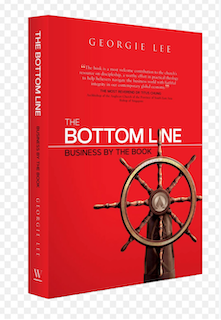
This book is impressive. It is quite comprehensive, and I gained some theological, historical and practical insights into practising our faith in the marketplace. Besides breadth, it has depth. In addition, the theological insights are applicable, and he gives notable, practical examples. It is worth a slow chew, a reflective reading pace. I decided to share my reflections on the five parts of this 318-page book.
PART ONE: FALL & REDEMPTION
There are ten short chapters in Part 1. They are necessary foundational reading. They gave an understanding of how sin has degraded and corrupted human beings, society and therefore the nature of work and the economy. Both the fallen economy and a vision of a redemptive economy are described and explained.
There are many signs that the world’s economy is affected by the fall. The fall distorted our worldviews, which determine our choices and consequences. The chief manifestation of this fall is the utilitarian worldview. This looks at results and consequences to decide whether an action is right or wrong, regardless of morality. A fallen world tends towards the utilitarian worldview: maximising profit makes an action right. What’s wrong with sweatshops?!
Even economic theories are affected: from Adam Smith, who harnessed sinful self-interest for economic growth, to Milton Friedman’s promotion of shareholder primacy over stakeholders, we see signs of Adam’s fall. Lately, we have seen how companies have rewarded shareholders (investors) at the expense of stakeholders (employees, suppliers, customers, government and society). The rise of Big Tech: Google, Amazon, Microsoft, Apple, and Meta is an example of this downward spiral.
The author mentioned the 2008 Lehman Brothers collapse, which affected 10,000 retail investors in Singapore who lost US$370 million in structured investment products. It’s an example of the dire consequences of a utilitarian, instead of a stewardship worldview.
The author also pointed out two major world problems that result from fallen worldviews. The rich-poor divide and environmental-social issues. World Bank statistics indicate that “global progress in reducing extreme poverty has ground to a halt” due to the largest increase in global inequality. The individual net worth of the world’s top billionaires surpasses the GDP of several nations. For example, the personal net worth of Elon Musk, as of 2025, is greater than the GDP of developed countries such as Finland or New Zealand.
This is infuriating to most ordinary people coping with inflation and low wages. Big companies’ damage control is corporate social responsibility. Today, the triple bottom line of “profit, people and planet” is the script that now drives branding, productivity, efficiency, recruitment and, of course, almighty profit. Win-win for all concerned. But motives are still utilitarian. The goal of human flourishing is absent. Profit remains the golden calf.
HINTS OF THE WAY FORWARD
The author then shows how God wants to redeem not just the soul, but society as well. God desires all to be saved, but the hope of a new heaven and new earth is not a pie-in-the-sky after you die, but redemptive living conditions here on earth while you live. He shows God’s desire for a redemptive application to all aspects of life: family, work, political relationships, agriculture, environment, and technology. Christ came to fulfil the Old Testament law of Jubilee, which is God’s plan for an economic reset that lessened the rich-poor divide for Old Testament Israel. Followers of Christ have a faith meant to impact the personal, social, economic, and environmental facets of life in a holistic redemption. Their faith challenges all secular-sacred dichotomy, not merely the rich-poor divide. It also gives them a sound theology and attitude towards the purpose of work. It is more than merely a means of earning a living; it’s deeper. It has to do with making work missional, a participation in God’s ultimate mission of redeeming, healing and making all things in the world new.
Here are some quotations to give you an idea of what is in Part One:
“Our worldview determines the choices we make and the resulting actions we take. It informs the inner script of our hearts. We consciously or unconsciously rely on it to help us identify who we want to be, how we want to live, what we consider good or bad, valuable or worthless, righteous or evil, right or wrong, and so forth. Everyone has a worldview, even though one may be uninformed or unaware of its influence on how we think or behave.” (p 4)
“At least 1.7 billion workers live in countries where inflation is outpacing wages, and over 820 million people, roughly one in 10 people on Earth, suffer from hunger. Women and girls often eat the least and last, and make up nearly 60% of the world’s hungry population.” (p 21)
“There is no magic bullet except to build a culture of trusting God, anchoring our business on His word and promises, and seeking His wisdom. A redemptive enterprise that promotes human flourishing is the only antidote in these uncertain times.” (p 23)
“Christians are expected not only to obey the law but also to be ethical. We are not to merely comply with the minimum prescribed by law or avoid wrongdoing but be motivated by a desire for good and human flourishing.” (p 29)
“If Christian hope rests on just “going to heaven” – that is, salvation that is essentially oriented away from this world – it has little bearing on what we do in our present life. On the other hand, if the hope is for God’s new creation, for a new heaven and new earth, and if that hope has already come to life in Jesus, then the church cannot stop at “saving souls” but must anticipate the eventual renewal by working for God’s kingdom in the wider world, bringing healing and hope in the present life.” (p 34)
“As I have said in my introduction to this book, I do not advocate business as mission. I assert that business is mission. When business is missional, evangelism becomes an outcome rather than a strategy. The messenger is the message. Evangelism is important, but missional business is more than just about evangelism. The “telos” or ultimate aim of business is human flourishing. When God calls us to business, it has to be missional; there is no option whether as mission or otherwise. This is what makes an entrepreneur redemptive.” (p 35)
“The Jubilee narrative is a template of a redemptive economy, not in a literal sense, but in its underlying moral and relational framework and principles.” (p 37)
“The Jubilee is an economic, cultural, environmental, and communal reset – the land and people are set to rest, and all those who are in slavery are set free to return to their communities………… The Jubilee laws on the economy and ecology stand in contrast with the current state of the global economy and the ruthless exploitation of natural resources. They remind us of the need to care for the well-being of people as well as land, nature, and the environment.” (p 38)
“The Jubilee laws were also to deal with long-term poverty. People became poor for various reasons; they struggled to improve their situation. However, the Jubilee allowed for a new beginning in every generation. Although God’s gift was lost through misfortune, mismanagement, or any other cause, His divine grace restored and renewed the family resources and the economy. For people caught in the poverty trap, they gave them hope and new opportunities as the land was restored to its original owners, debts were cancelled, and slaves were set free. Under His divine provision, there will be no lack.” (p 39)
“In managing scarce resources, believers have access to the precious resources of the Christian tradition: love, faith, and hope. When spiritual resources are added to economics, the outcome is fruitfulness, wholeness, and flourishing. Business becomes not only about creating monetary value but also a shared community of values and resources.” (p 45)
“Frequently, Christians rank their life’s priorities as God first, family second, and work third. In other words, all three are mutually exclusive in order of priority. There is another example of binary thought. Though God is first in terms of our priorities, He is excluded from our family and work – we are compartmentalising Him out of our family and work!” (p 49)
A leading apologist once said, “We are all priests before God; there is no such distinction as ‘secular or sacred’. The opposite of sacred is profane. In short, no follower of Christ does secular work. We all have a sacred calling.” (p 51)
“Our work is our worship. Our career is our calling. Our posting is our parish. Our position is our pulpit.” (p 56)
Part Two is titled “Embodying the Bottom Line”. It will get more practical. If you like what you read in part one, let me know in the comment box.